
– Written by Peyton Andino –
When I saw that one of my favourite artists was opening for pop superstar and Disney sweetheart Olivia Rodrigo, I was ecstatic.
Finally, I thought, She’s going to get the attention I’ve been telling people she needs!
I’ve listened to Chappell Roan since the summer of 2022, watching her grow as an artist and develop a specific persona, vision, and style for the music that she makes. Each of her songs are perfect representations of the character that she has meticulously illustrated- a midwestern girl who dreams of freedom, glitter and excess. When she finally gets to the world that she’s prophesied, she finds herself at the mercy of scorned lovers, first heartbreaks, and the discovery of her complex feelings on sexuality.
I spent months telling people how awesome she was. I’d ramble on about Pink Pony Club, discuss the intricacies in Casual, cry on empty streetcars to Love Me Anyways, queue up My Kink Is Karma in summer playlists, and enthusiastically teach my friends Hot To Go. Her music had become integral to my growth, to the point where I had reviewed her “The Rise and Fall of a Midwest Princess” late into the night of its release on my Instagram.
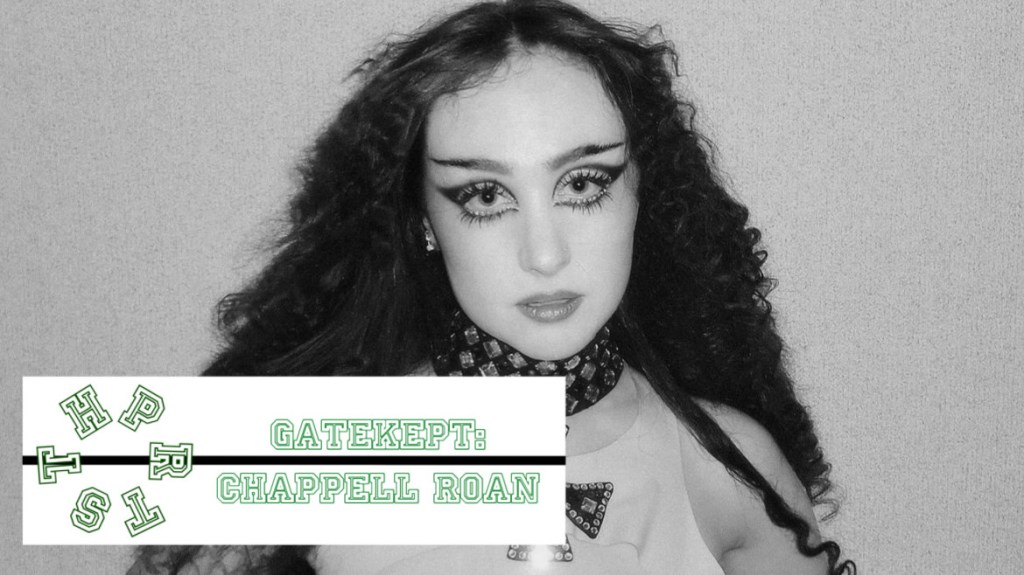
At the time of writing, Chappell Roan has become a viral sensation. Her opening set for Olivia Rodrigo was electric, and the crowd of adoring teenage girls fell in love with her. In perfect timing to properly capitalise on this fame, she dropped the 80s-inspired pop hit Good Luck, Babe. She stares at me from the streaming cover of her single, wearing a dramatic red piece with a pig nose replacing her own, referencing what I’m assuming is Babe the Pig. It’s symbolic, as the movie is about a pig who doesn’t want to follow the natural hierarchy that has been pushed onto him. She sings about a former lover, who she predicts will spend the future mourning what they had together, hiding her love of femininity and instead fulfilling what is expected of her, marrying a man who sees the lover as nothing more than a wife. Babe, in this scenario, is this lover, who has a choice to make over whether or not she chooses freedom in her sapphic identity or disguising herself as a straight woman.
I can’t help but feel a bit protective of her.
Gatekeeping as a concept has been something I’ve always hated. Why would you limit an artist’s potential by wishing them niche success instead of virality and fame that could propel their career into the spotlight? Why ask someone when they started listening, to name five songs, to properly express their feelings towards an artist?
With Chappell Roan, I find that many misconstrue her image. Chappell Roan is a concept, a persona that the artist has made, and she has made this clear in multiple interviews. Despite this clear assertion that has been made, listeners attempt to delve into her personal life, past the boundaries that are socially “normal.” People are denying her identity, citing the fact that she has sung about her disappointment in dating men as an indicator that she is not a lesbian. Social media users desperately scour for reasons that prove Chappell Roan could be “problematic,” searching for issues that don’t exist. Fans are beginning to gatekeep her, pushing out listeners who they deem unworthy to be called her fans.
The most compelling part about this new wave of gatekeeping is that it’s not just limited to rising artists. Some of the most popular bands and artists in the past few decades are now finding themselves victims of this exclusion. From Radiohead to Nirvana, people vie for individuality, something that sets themselves and the music they listen to apart from the crowd. A tale as old as time, where someone wearing a t-shirt is asked how much they truly like an artist, is finding its way back into social prevalence as more and more people strive to feel different.
Is it music that makes us different? Does the backing track to our everyday activities make us distinct from others in a way that is so significant that people have to assert it to those they interact with? I don’t have much to say that hasn’t already been said about gatekeeping. To some, It’s bad and disrupts their rise and can ruin them financially. To others, It’s good. It helps preserve an artist’s message.
What I can say is, why can’t music be communal, and why can’t fans be normal? Is it that hard to both appreciate an artist and preserve their message? In terms of Chappell Roan, there cannot be reasons why people can’t listen to her music if they don’t fit a certain criteria, and I find it extremely hard to find a reason for a majority of other artists.
However, if I believe in everything I’m saying, I need to get over myself. The possessiveness certain fans feel over smaller artists turns into obsession, and leads to unhealthy parasocial relationships that can directly impact how listeners view the world around them and their interactions. Music is meant to be enjoyed, to provide artists with a medium that conveys their message to whoever wants to listen, and who am I to stop others from experiencing that message?
Even if people misconstrue what an artist says, it doesn’t take away from the creator’s truth. This may be annoying for fans to experience, but what should be seen here is the truth. Different interpretations are a rare attempt at media literacy, something extremely hard to come by in our time of easily accessed definitions and pre-composed thoughts gathered from the internet. I’m glad that, even if people don’t fully understand what an artist is saying, they can derive meaning from their words that apply to them.
Let people enjoy things, and Good Luck, Babe!
 SOUTHPORT MAGAZINE
Leave a comment